MicroVerse Micro-World Simulation
Mechanism-aware world modeling for organs, cells, and subcellular biological processes.
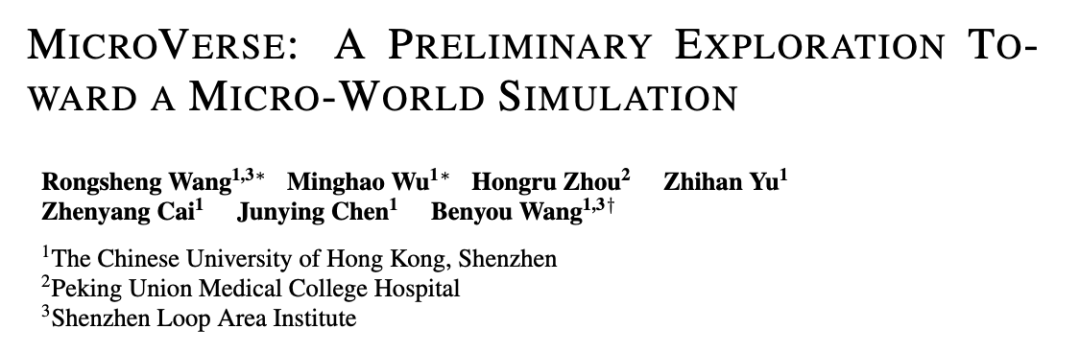
MicroVerse explores a different kind of world model: not city streets or game worlds, but biological micro-worlds where organ, cellular, and subcellular processes unfold under domain mechanisms that are often invisible to ordinary vision-language models.
Research Storyline
MicroVerse treats organs, cells, and subcellular processes as evolving worlds whose important state is often hidden from surface images.
The project asks whether generative systems can respect biological mechanisms and state transitions, not merely produce plausible-looking pictures.
Benchmarks pressure models to predict, generate, and reason about biologically meaningful transitions over time.
MicroVerse complements TwinMarket and Economic World Models by showing how the same simulation agenda can apply to high-stakes scientific domains.
Research Questions
Micro-world modeling requires reasoning about mechanisms, state transitions, and biological constraints, not only visual appearance.
The project builds tasks and benchmarks that test whether generated or predicted dynamics remain biologically meaningful.
The system points toward simulation models that can be inspected, corrected, and aligned with scientific evidence.
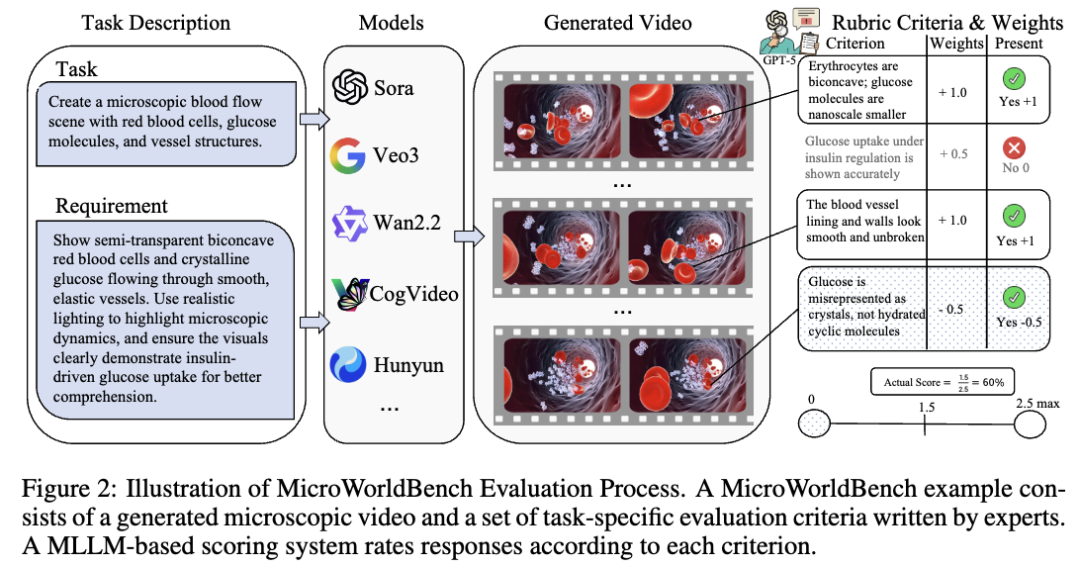
Display Figures
Paper Trail
Introduces biological micro-world simulation as a world-modeling direction for organs, cells, and subcellular processes.
RepositoryShows the same agentic simulation idea at social and market scale, giving MicroVerse a broader world-modeling context.
Economic World ModelsWhy It Matters
- It expands world modeling from visually obvious environments to scientific domains where mechanisms are hidden and high-stakes.
- It connects medical AI, biological modeling, and agentic simulation under one research question: can models reason over evolving worlds?
- It complements Economic World Models and TwinMarket by showing that the same simulation agenda can apply to microscopic systems.